How to write a chorus worth coming back to
Find the song’s central sentence, build a singable hook and revise what you hear. A practical guide with an original worked example.
Published by WaveQuake, the studio featured in this guide. Product screenshots show the live interface. Illustrations explain the ideas; examples are creative starting points, not guaranteed results.
To write a chorus, decide what your song means in one sentence, turn its strongest phrase into a hook, and build a few singable lines around that idea. Then test whether the chorus feels different from the verse and still makes sense when you hear it again.
You do not need a perfect melody before you begin. You need something worth returning to. A chorus can be joyful, furious, quiet or unresolved; its job is to give the listener a recognizable centre.
This guide develops an original example from a vague idea into a four-line chorus, then shows how to build and review a complete song in WaveQuake. The writing exercises are suggestions you can adapt, not a formula for a hit.
1. Find the sentence your chorus needs to say
Start with ordinary speech. Complete this thought: “By the chorus, I want someone to understand that…” If the answer contains three separate stories, choose the one that matters most today. You can save the others for another song.
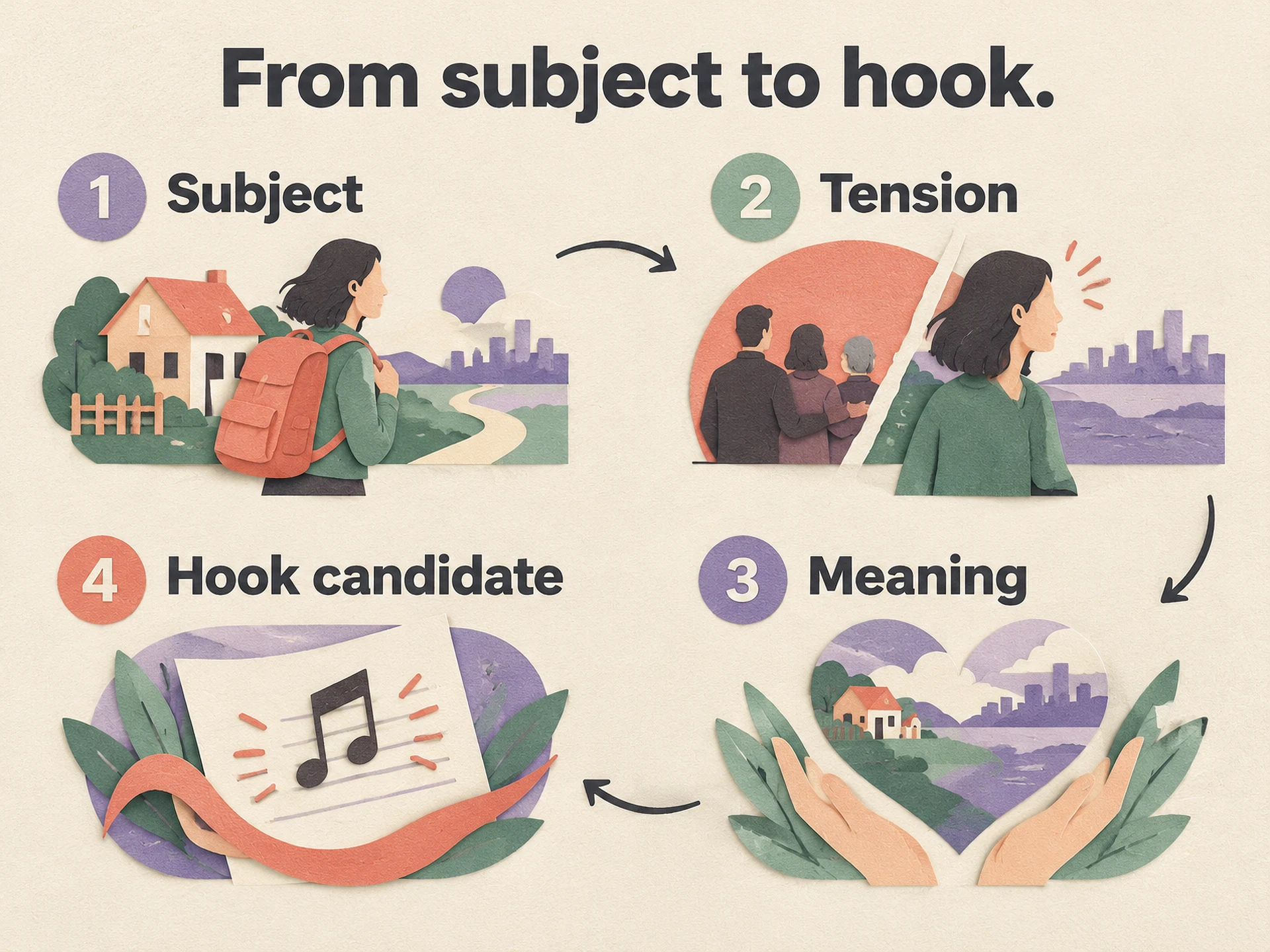
Suppose the starting idea is leaving your hometown. That subject could become a celebration, an apology or a warning. Our example chooses a particular tension: the narrator wants a new life but does not want leaving to look like rejection. The plain-language sentence is: “I can leave this place and still belong to it.”
That gives every later choice something to answer. A verse might describe an early bus, a bag by the door and a parent pretending not to worry. The chorus can say what those details mean. It does not need to retell the whole departure scene.
 View full-size infographic
- SubjectLeaving home.
- TensionWanting change without rejecting the people who stayed.
- MeaningDistance does not have to erase belonging.
- Hook candidateI can go and still come home.
Carnegie Hall’s songwriting workshop treats the chorus as a place to find the song’s heart. Use that as a useful question, not a demand that every chorus sound huge. A whispered admission can carry the centre of a song.
If you are still choosing a subject, try our songwriting prompts first. If you already have a story, resist the temptation to start another one whenever the first draft feels awkward. An awkward but specific idea gives you something to improve.
2. Write several hooks before choosing one
A hook is a memorable element; it can be a lyric phrase, a melody or another musical gesture. Here we are working on a lyric hook. Write five short ways of expressing your central sentence. Do not force a rhyme yet.
For the leaving-home idea, possible hooks include “A different road, the same roots,” “There’s room for home in a suitcase,” and “I can go and still come home.” The last option uses everyday language and contains a clear contrast. That makes it a useful choice for this exercise, even though another writer might prefer one of the others.
Speak each candidate as if you were saying it to someone you know. Which words receive emphasis naturally? Which phrase requires an explanation? Which one makes you want to hear the line that follows? Choose a hook for its meaning and delivery, not because it looks clever in isolation.
You can place the hook at the beginning, the end, or both. Try it in two positions and read the whole chorus each time. If the title appears twice, the intervening lines should earn that return. Repetition becomes useful when the listener experiences the repeated thought differently.
| Placement | What to try | What to check |
|---|---|---|
| Opening line | State the idea, then develop it. | Do the next lines add anything? |
| Closing line | Let the earlier lines lead to the hook. | Does the arrival feel clear without explanation? |
| Opening and closing | Frame a small emotional movement. | Does the repeated line still feel intentional? |
Keep the alternatives in a separate note. A discarded hook may be the right bridge line later. Saving it also makes cutting less intimidating: you are making a choice for this draft, not declaring the other phrase worthless.
3. Build a short chorus around the hook
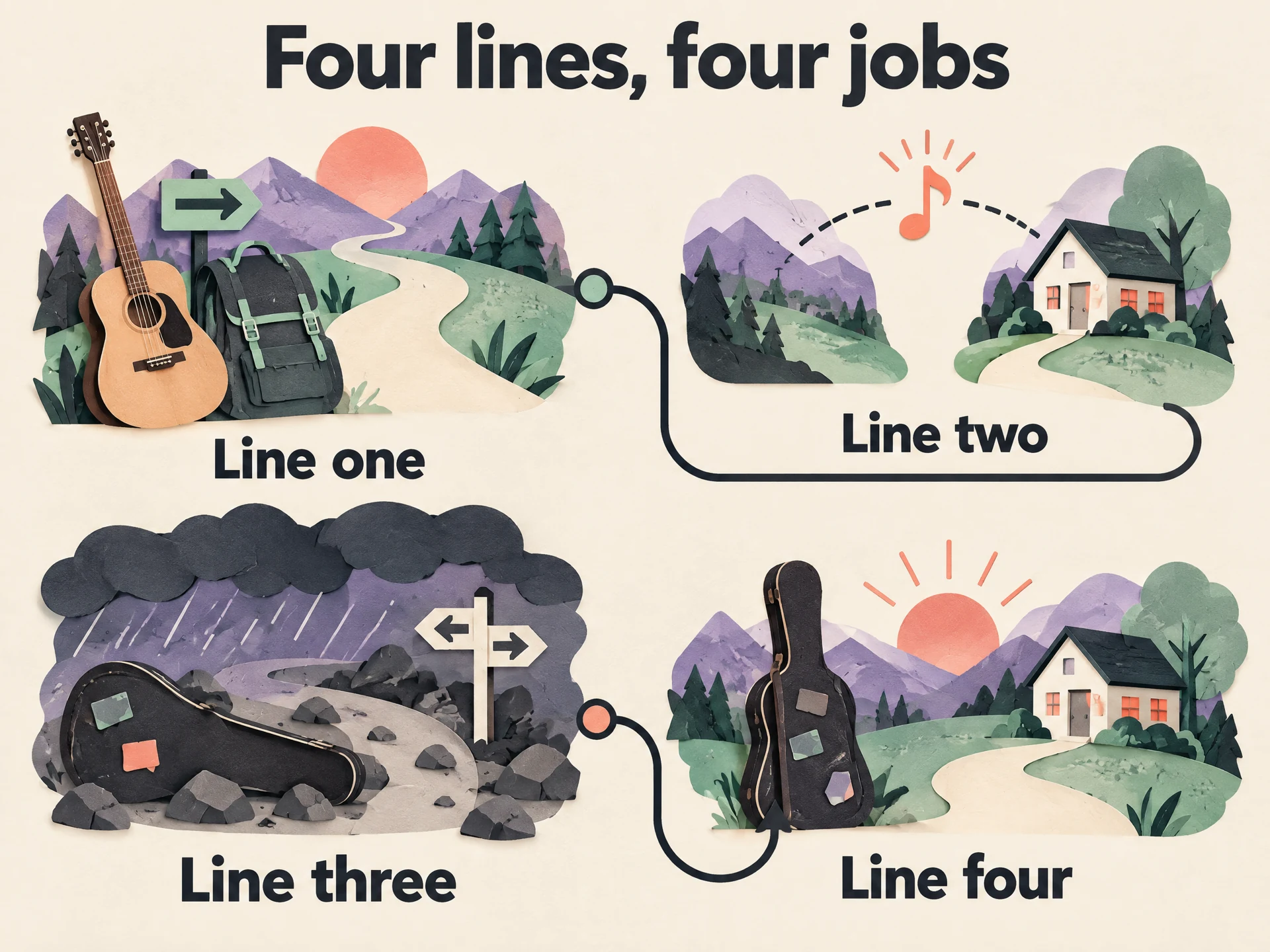
Four lines are a manageable exercise, not a rule about how long a chorus must be. Give each line a purpose: state the claim, make it concrete, complicate it slightly, and return to the claim. This keeps the section from becoming four unrelated slogans.
[Chorus]
I can go and still come home
Keep your number in my phone
Every mile can make me grow
I can go and still come home
This is an original draft written for the guide. Its strength is a clear centre. Its weak spot is the general third line: “make me grow” tells us the intended lesson without showing the cost of leaving. That is a useful revision target, not a reason to discard everything.
Try replacing it with “Miss your voice on roads unknown.” Now the narrator admits that the decision will hurt. The thought has more tension, although the line also needs a spoken-rhythm check. You might eventually choose a different rhyme or drop the rhyme entirely to preserve a more natural sentence.
 View full-size infographic
- Line oneMake the promise: I can go and still come home.
- Line twoShow a small connection that survives the move.
- Line threeAdmit the uncertainty or cost.
- Line fourReturn to the promise with that cost in mind.
Do not mistake a tidy rhyme for a finished chorus. Read only the meaning, ignoring the line endings. Does it hold together? Then read only the last words. If they seem to be choosing the story for you, revise the sentence first and solve the rhyme afterward.
A useful alternative exercise is to write the chorus without any rhymes, then add only the ones that arrive naturally. This can expose filler such as “tonight,” “somehow” or “you know” when those words exist solely to complete a line.
4. Check rhythm, breath and natural emphasis
Read the chorus over a steady tap. You do not need to choose a precise tempo yet. Listen for lines that require a sudden rush, an unusually long pause or stress on a word you would normally say lightly. Those moments may work musically, but they deserve a deliberate decision.
Compare “I can go and still come home” with “Although I am leaving I will continue belonging here.” They express related thoughts, but the second sentence asks much more of a short musical phrase. You can shorten the wording, lengthen the phrase, or make the delivery more speech-like. There is more than one solution.
Syllable counts are a useful rough check, not proof that two lines will sing the same way. Word stresses, vowel sounds, pauses and melody all affect the result. Try humming a simple shape and speaking the words over it. If a word has to bend unnaturally, change the phrase before adding more instructions to a generator.
Berklee’s lyrics-to-music curriculum includes stressed syllables, phrase lengths and contrasting sections. Our practical exercise is to mark the words you want a listener to notice, then check whether your spoken delivery already supports them.
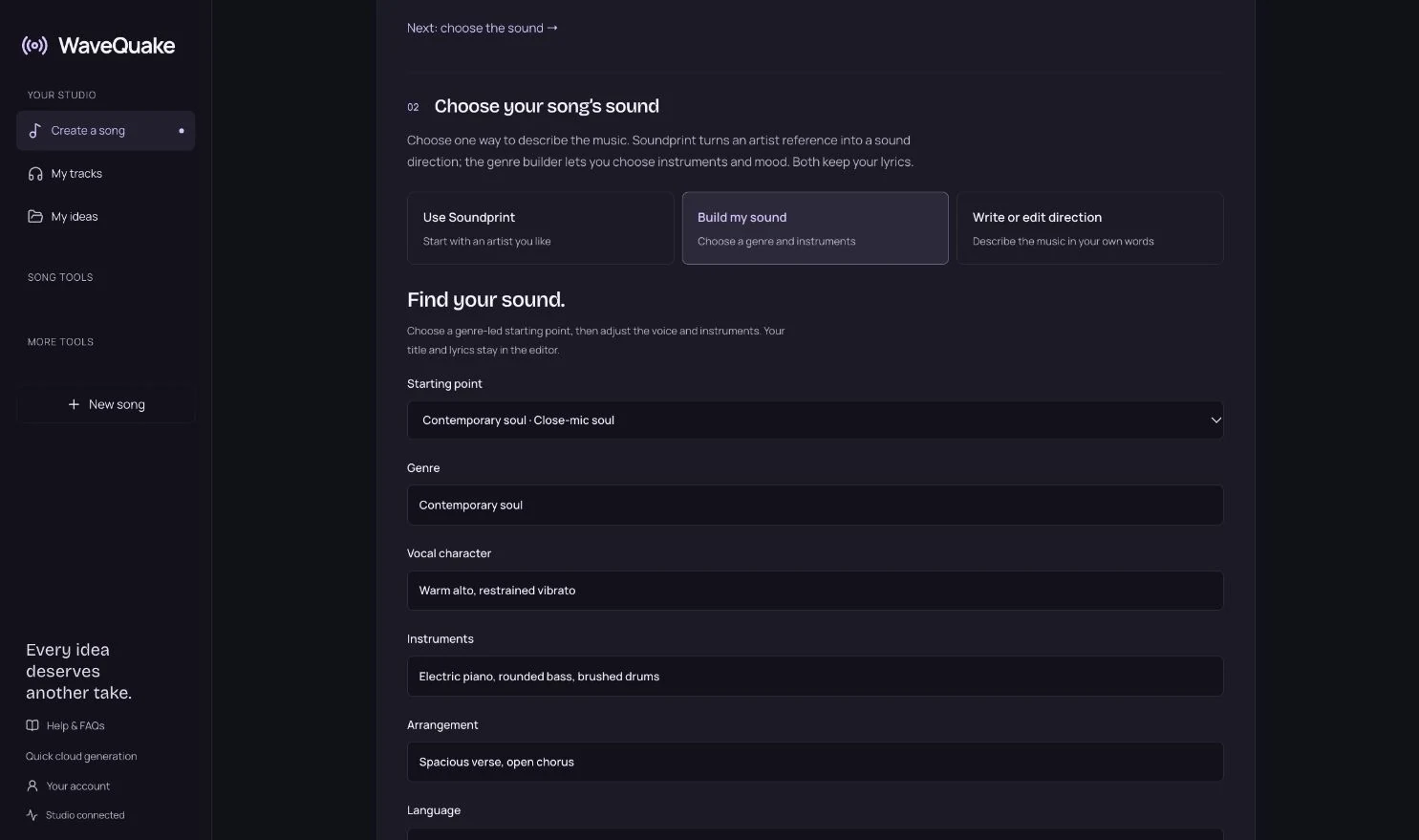
Choose a sound that gives the words enough room. A dense lyric and a very busy arrangement can fight for attention. In WaveQuake, Build my sound offers a way to choose a musical direction before you create the track. The musical performance still needs listening and review.
5. Make the chorus different from the verse
The chorus does not have to be louder. It needs a reason to register as a return or a change. You might use shorter lines, a repeated phrase, longer vowels, fewer instruments or a different vocal delivery. Pick one clear contrast before trying five at once.
For our example, the verse could be conversational and detailed: a ticket folded twice, a suitcase zipper catching, a kitchen clock. The chorus uses simpler language and repeats its central promise. Even before music, those two sections are doing different jobs.
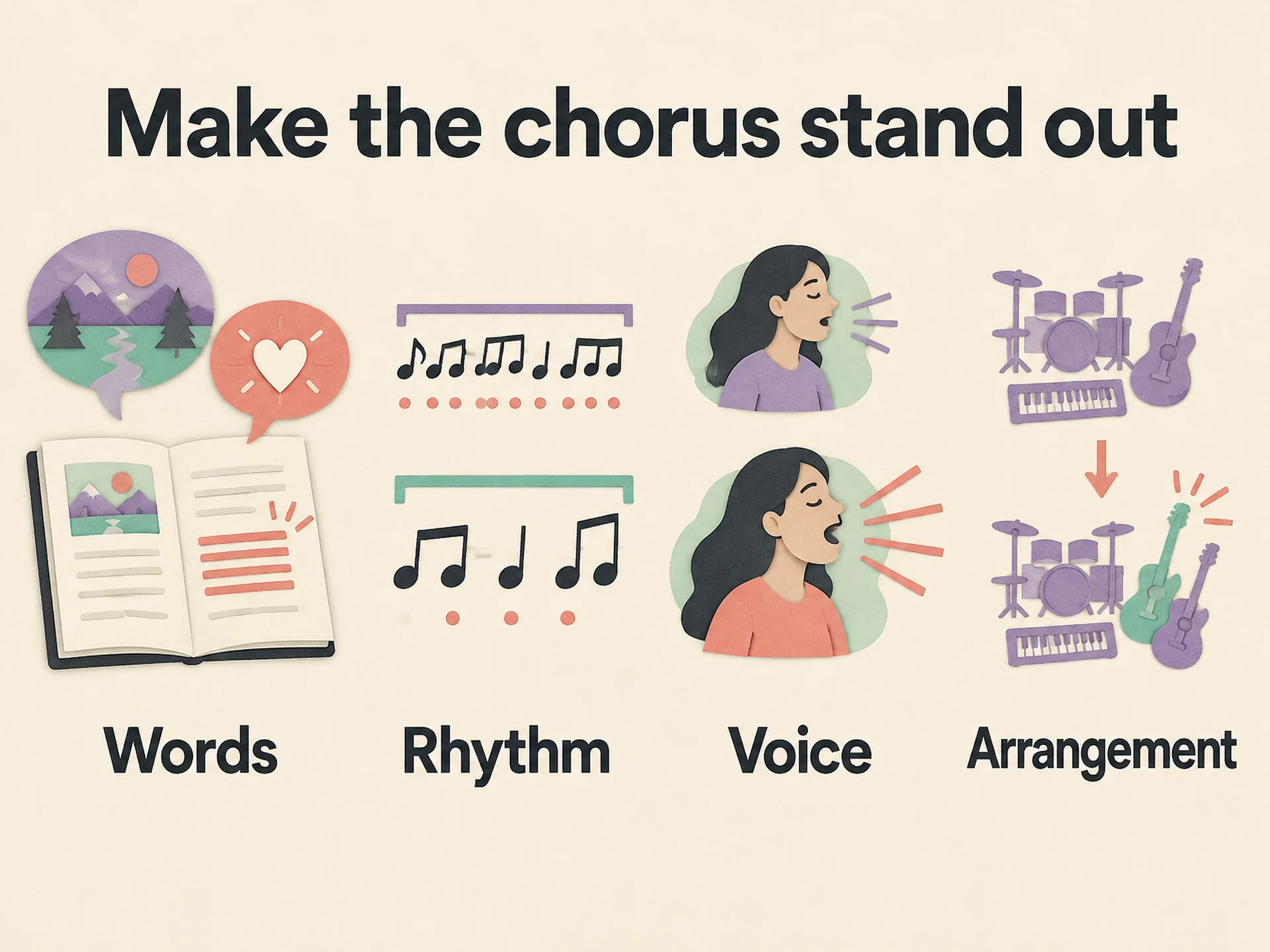 View full-size infographic
- WordsDetailed scene in the verse; one main claim in the chorus.
- RhythmBusier verse phrases; more space around the hook.
- VoiceRestrained verse; a more open chorus delivery.
- ArrangementOne supporting change, rather than a wall of new instructions.
If you can hear the desired contrast in another track but cannot describe it, Soundprint can help develop a musical direction from an artist reference and your own twist. Read the description before using it. It is a writing aid, not a voice clone or a promise to reproduce a recording.
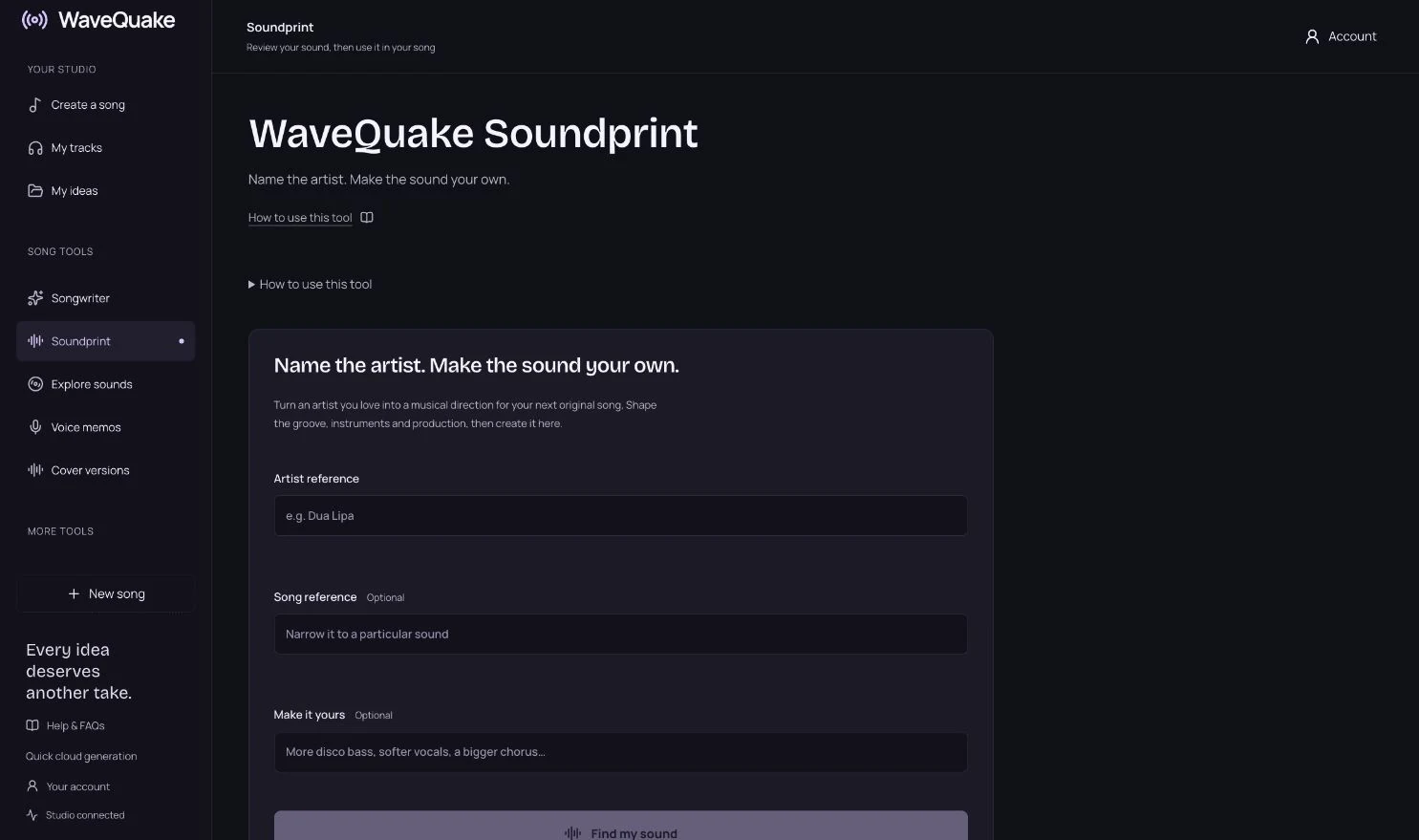
For a simpler starting point, write: “Conversational acoustic-pop verses, a more open melodic chorus, clear lead vocal and light percussion.” Keep that in the sound direction field. The lyric field should contain the actual words and concise section cues.
6. Develop the idea with WaveQuake Songwriter
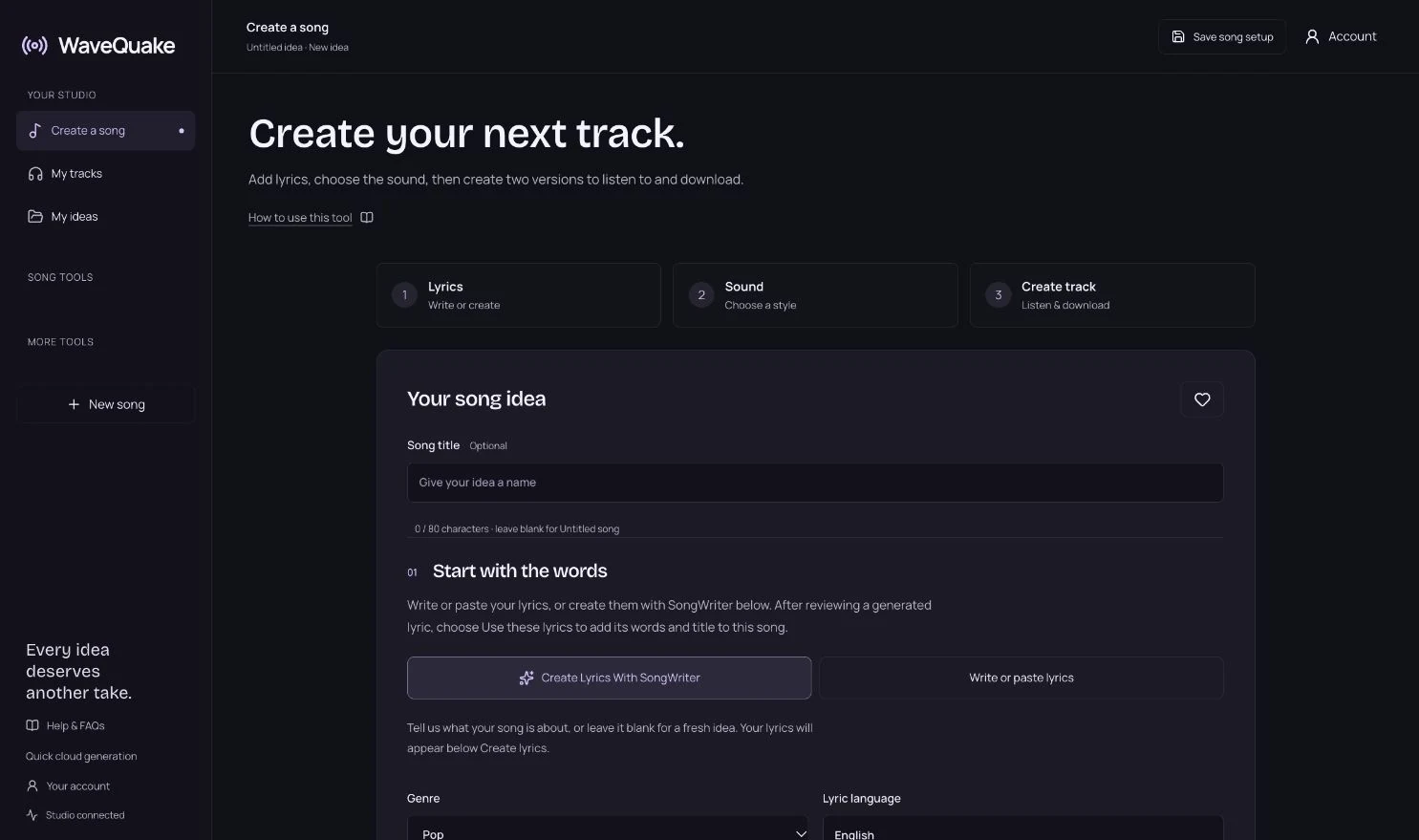
Open Create a song and choose Create Lyrics With SongWriter. Describe the story, choose the genre and lyric language, and give Songwriter the hook you want to explore. The optional detail controls let you specify a line to keep and ideas to avoid.
A young adult leaves their hometown but wants their family to know that leaving is not rejection. Begin with a quiet kitchen on the morning of departure. The chorus should express that they can go and still belong. Use concrete details and conversational language; keep the emotion hopeful with a little uncertainty.
Put “I can go and still come home” in Hook to build around if you want it developed. If its exact wording matters, use A line to keep exactly as well and check the returned draft. Those fields serve different purposes: a theme to develop is not the same as a fixed line.
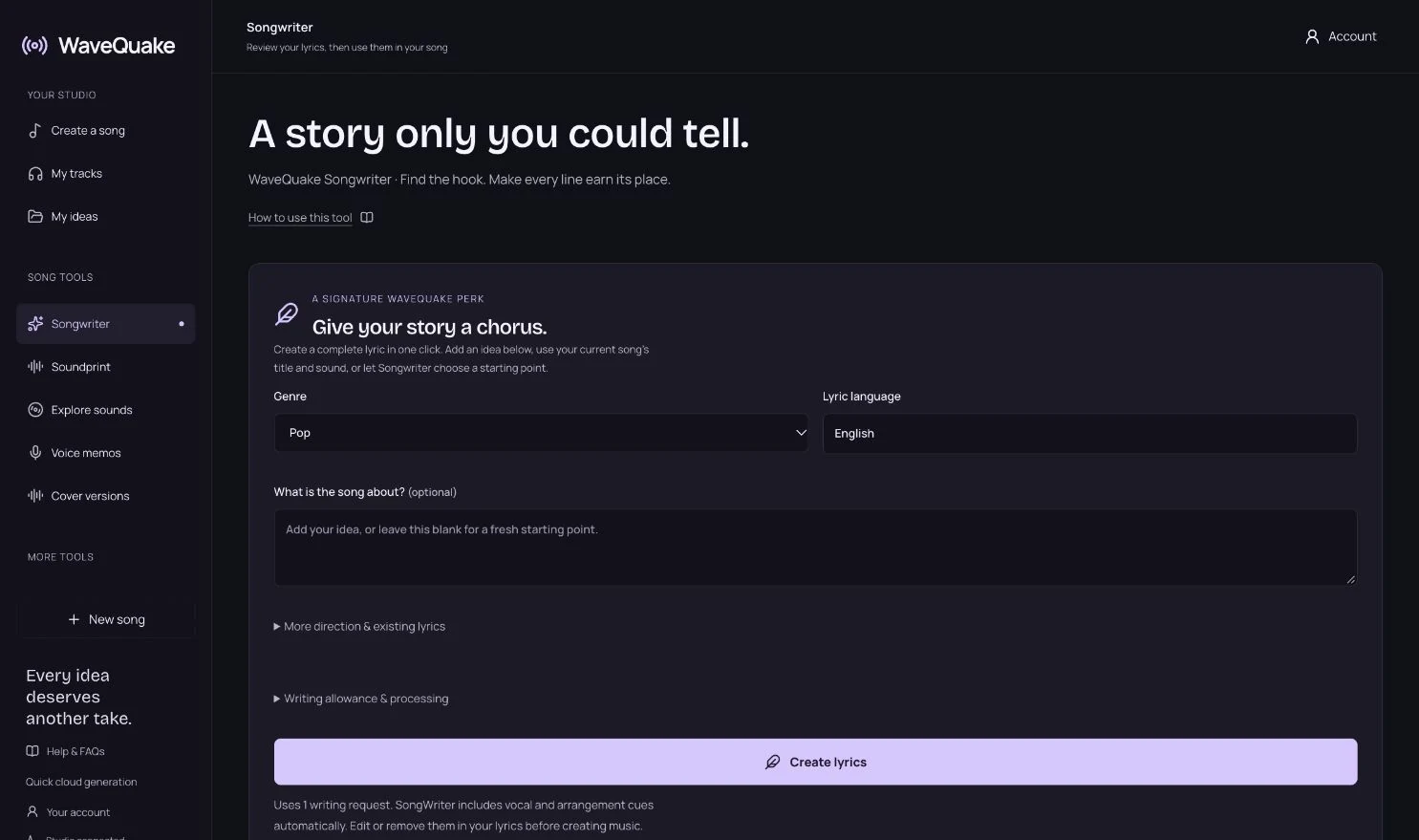
Creating lyrics uses one writing request. Review the title and chorus in Your writing room, edit the draft, then choose Use these lyrics in the embedded composer. Songwriter includes performance cues automatically; remove any that feel crowded or conflict with the song. Cues remain suggestions, not exact arrangement controls.
When the words and sound agree, create the music. A successful generation produces two versions. Only the longer version counts against creation minutes, rounded up to a whole second. See the current allowance details before starting a long series of experiments.
7. Revise what you actually hear
Listen through the verse into the chorus instead of judging the hook by itself. Does the transition make sense? Is the important phrase understandable? Do you remember the central idea afterward? A chorus can read well and still feel cramped in a particular performance.
Write one observation before generating again. “The third line is rushed” suggests a lyric edit. “The chorus has no contrast” suggests a delivery or arrangement experiment. “I dislike everything” is harder to act on; find the first moment where your attention drops and begin there.
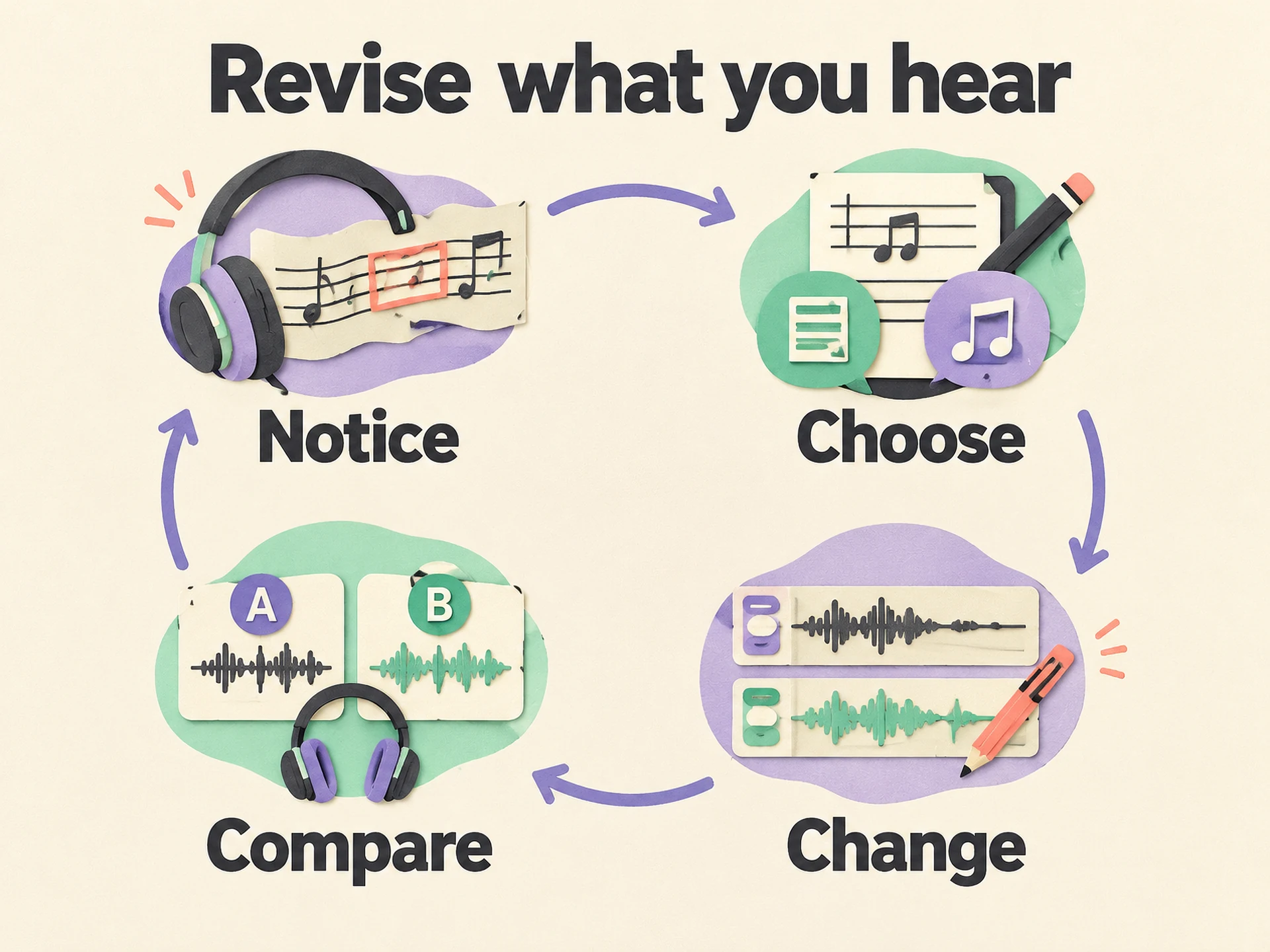 View full-size infographic
- NoticeName the line or transition that loses you.
- ChooseDecide whether the issue is wording or musical delivery.
- ChangeMake one focused edit and keep the earlier version.
- CompareListen to the same section in both takes.
Once the performance works, you can compare mastering profiles as a finishing step. Mastering will not rewrite a confusing hook or repair a lyric that has too many words. Keep writing decisions and finishing decisions separate so you know what changed.
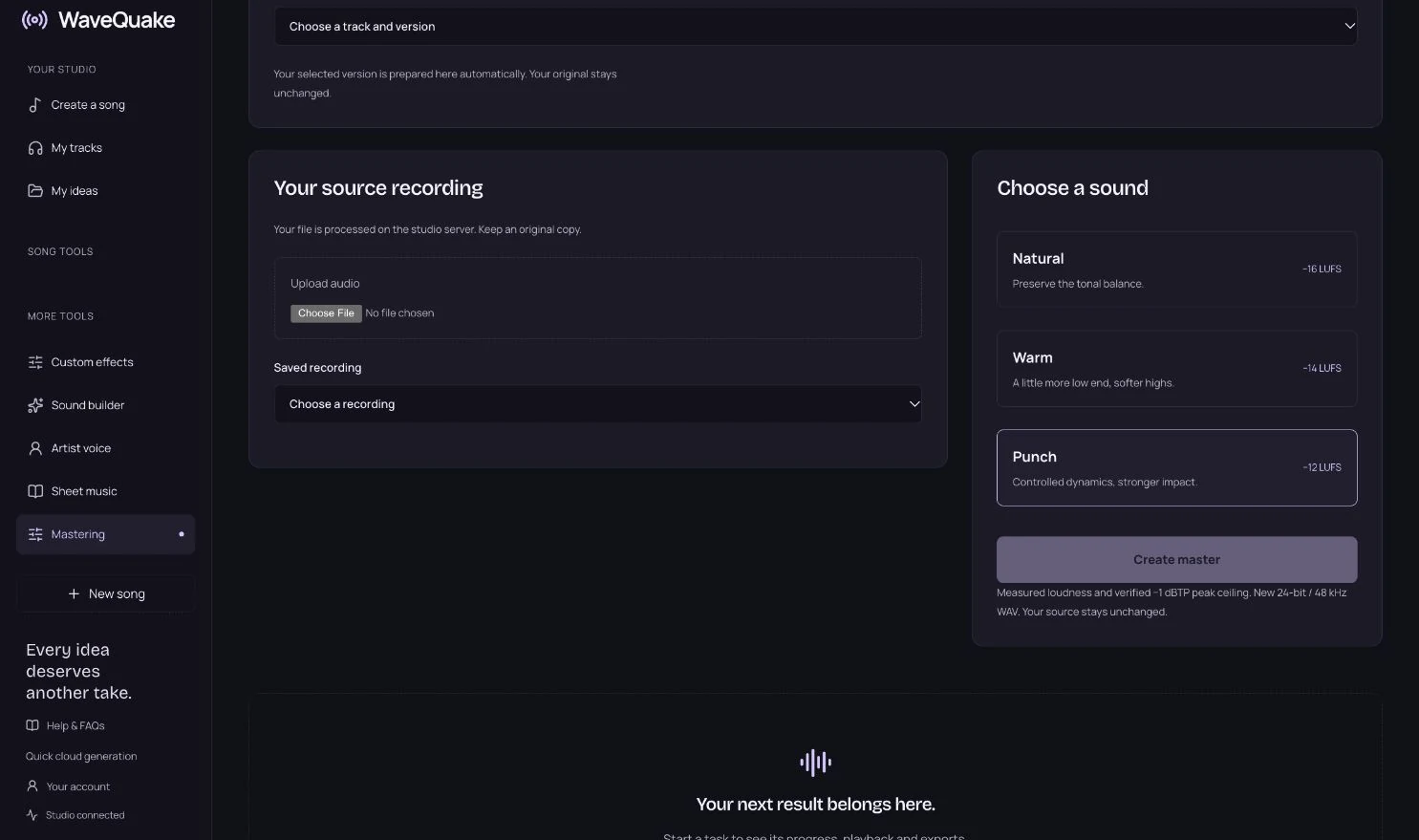
If the whole song feels repetitive, use the song structure guide to give the second verse and bridge a different purpose. You may not need a new chorus at all; the surrounding story may need to move.
Common questions
How long should a chorus be?
There is no fixed length. Four lines are a useful writing exercise, but the right length depends on the melody, pace and job of the section. Listen for a complete thought and an intentional return rather than aiming for a universal number of seconds.
Does a chorus have to rhyme?
No. Rhyme is one way to create connection and expectation. Repeated wording, rhythm or melody can also hold a chorus together. Keep a natural and meaningful line rather than forcing a rhyme that changes the story.
What is the difference between a hook and a chorus?
A chorus is a song section. A hook is a memorable element, such as a lyric phrase, melody or instrumental gesture. A chorus often contains a hook, but hooks can appear elsewhere in the song too.
Should I write the chorus or verse first?
Either can work. Start with the chorus if you already know the main statement. Start with a verse if a scene or character is clearer. Use the first section to discover what the other one needs to contribute.
Should every chorus use the same words?
Repeating the words can make the central idea easy to recognize. A small later change can also be effective if the story has changed its meaning. Keep the return recognizable and make any alteration intentional.
Can Songwriter help without creating the music yet?
Yes. WaveQuake Songwriter creates an editable lyric draft using a writing request. You review and apply the lyrics before separately creating music with creation minutes. You can also write and edit the words yourself.
Sources & checking
Product details checked on 26 October 2026. Prices, features and terms can change; review the linked offer before purchasing. This is a product guide, not a comparative audio benchmark.