How to write song lyrics: from idea to finished draft
Follow one original story from rough notes to a complete lyric, then choose a musical setting and revise what you hear.
Published by WaveQuake, the studio featured in this guide. Product screenshots show the live interface. Illustrations explain the ideas; examples are creative starting points, not guaranteed results.

You have something to say, but every line either sounds like a diary entry or bends itself around a rhyme. To learn how to write song lyrics, start with a clear situation, find the sentence at its centre and give the words room to be sung.
This guide follows one original story from rough notes to a short lyric, then shows how to develop and hear it in WaveQuake. The guide includes original lyric examples you can use as writing exercises. You can follow the method with a notebook and your voice before opening any music software.
1. Start with a situation, not a rhyme
Learning how to write song lyrics is easier when you give yourself a small, concrete problem. Choose one speaker, one listener and one moment. “A daughter calls her dad from an unfamiliar city but pretends she is settling in” gives you decisions to make. “A song about change” leaves almost everything open.
Write a plain sentence about what the speaker wants. Then write what makes that difficult. The daughter wants reassurance, but she also wants to sound independent. That tension gives the lyric somewhere to go without requiring a dramatic twist. You can invent the situation; you do not have to publish private experiences to write honestly about a feeling.
Make a short inventory: an object, a sound, an action and something unsaid. For this story, those might be a borrowed mug, a rattling heater, a thumb hovering over Call and a room that does not feel like home yet. Choose two details for the opening rather than squeezing in all four.
If the page is still blank, pick one of our songwriting prompts and change the setting. Spend five minutes collecting material before asking it to rhyme. A promising detail is useful even when the first sentence around it is awkward.
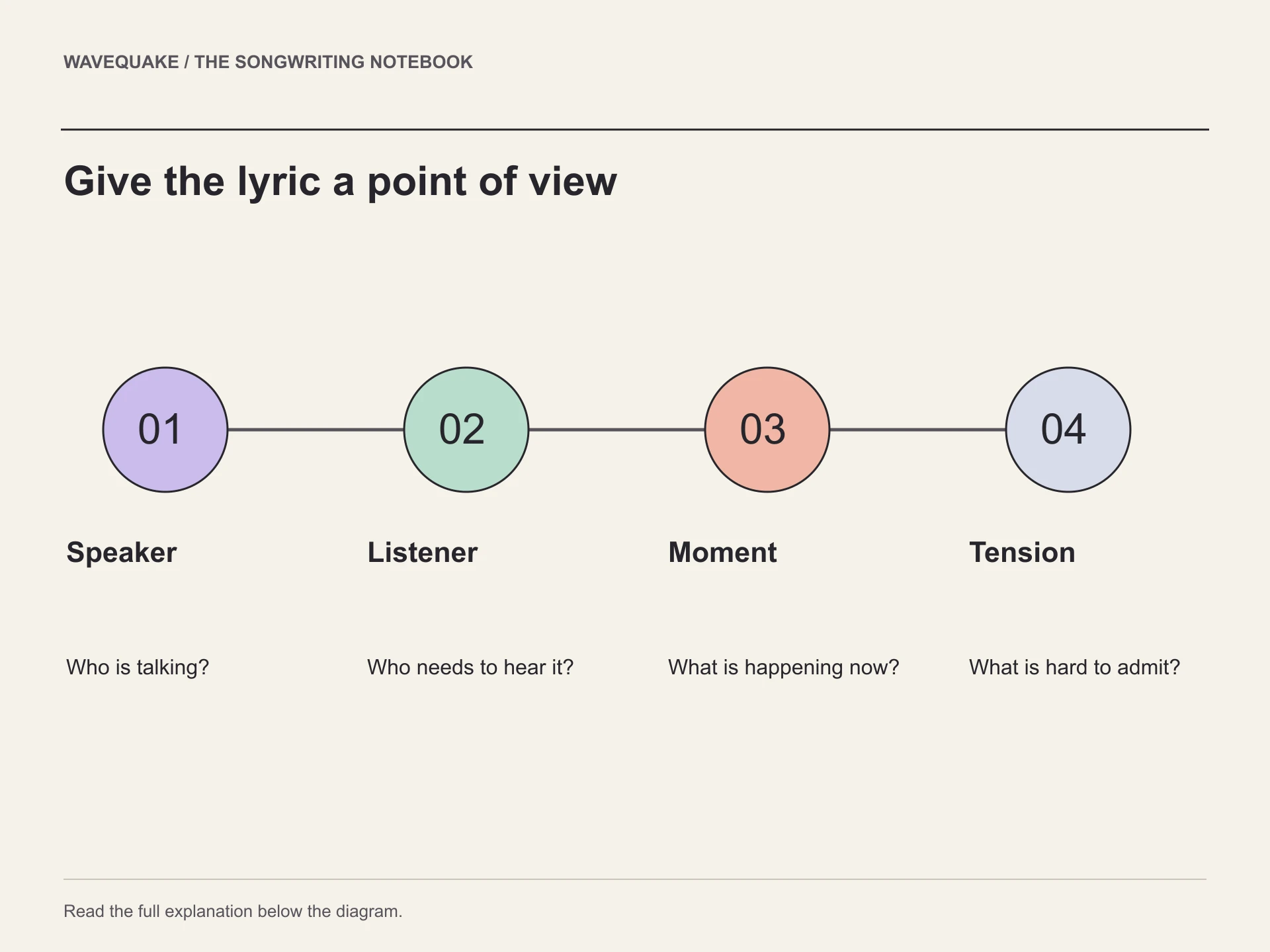 View full-size infographic
- SpeakerWho is talking?
- ListenerWho needs to hear it?
- MomentWhat is happening now?
- TensionWhat is hard to admit?
2. Find the sentence the song keeps returning to
Read your notes and ask what the speaker is trying to say underneath the details. Our daughter might eventually admit: “I wanted a new life, not a different family.” That is a useful working thought, even if it is too explanatory to become the final hook.
Try three shorter versions without judging them immediately: “I left the town, not you”; “Home still knows my number”; “I can miss it and still stay.” Each changes the emphasis. The first sounds defensive, the second offers an image, and the third accepts two feelings at once. Pick the meaning you want before choosing the prettiest phrase.
We will build this example around “I can miss it and still stay.” It gives the chorus a position to return to. The verse can show why staying is difficult, while the hook says why the speaker will try anyway.
Say the line as if you were speaking to someone across a table. If you would never use those words in that voice, revise them. For more detailed hook development, move to the chorus-writing guide; here we are choosing the central thought that will hold the whole lyric together.
3. Give each section a different job
Before writing a complete lyric, make a four-line plan. Verse one introduces the room and the unanswered call. The chorus admits that missing home does not mean leaving was a mistake. Verse two shows one small connection in the new city. The final chorus returns with a little more conviction.
Notice that verse two needs an event, not another list of things the speaker misses. A neighbour lending a chair or a colleague remembering her name can move the story without making the situation magically easy. The song becomes more satisfying when the repeated line has new evidence behind it.
A bridge is optional. Add one only if you have a thought that does not belong in either verse: perhaps the speaker realizes her dad also felt lonely when he first moved away. If that idea merely repeats the chorus, leave the bridge out of this draft.
Our song-structure guide explains common section maps. For this exercise, a compact verse–chorus–verse–chorus shape is enough. Section labels describe your intention; in a generated performance, they are guidance rather than a guarantee of exact timing or arrangement.
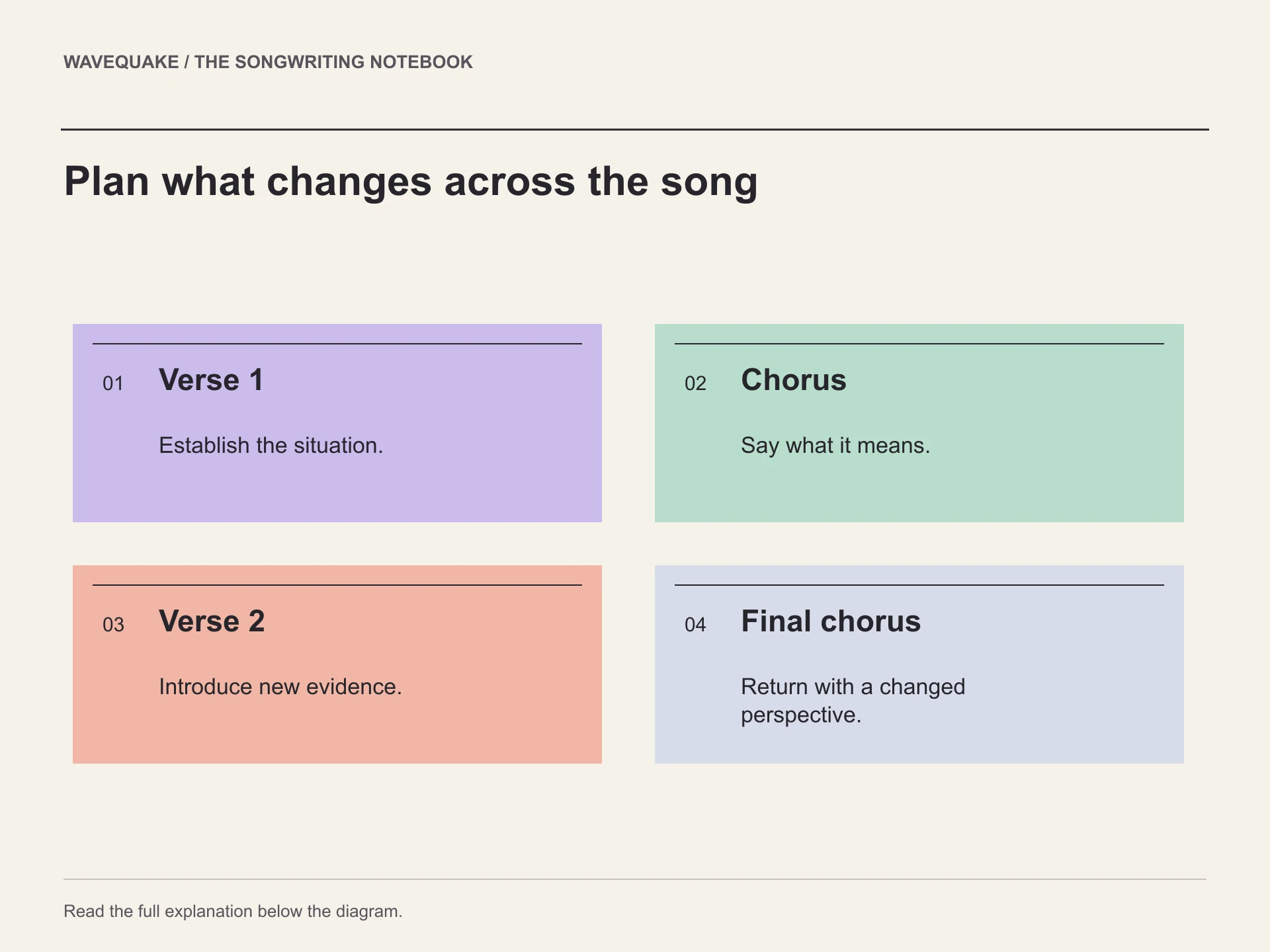 View full-size infographic
- Verse 1Establish the situation.
- ChorusSay what it means.
- Verse 2Introduce new evidence.
- Final chorusReturn with a changed perspective.
4. Write a rough verse before polishing every line
Here is a deliberately plain first pass. It makes the situation understandable, but it explains the feeling more than it lets us experience it. Do not throw away a draft like this. It gives you something concrete to improve.
First pass
I moved away and now I feel alone
I wish that I could call you on the phone
The room is cold and I am feeling sad
I want to say I miss you, Dad
The obvious rhyme pairs helped produce four lines, but they also pulled the wording toward familiar statements. Revise the actions first. What is the speaker actually doing while trying not to admit the feeling? Keep the phone and the cold room, but let them carry more of the story.
Revised verse
The heater knocks against the wall
I warm my hands around your call
You ask if I have found my feet
I tell you names of nearby streets
The revised version still needs to be heard aloud. “Around your call” is figurative, so decide whether it suits the speaker. The last line avoids answering the emotional question, which gives the chorus something to reveal. A useful edit creates that opening; it does not merely replace every ordinary word with a poetic one.
Save both versions. If the newer lyric becomes too indirect, a clear sentence from the rough draft may be exactly what the chorus needs. Clarity and imagery can work together.
5. Make the words comfortable to say and sing
Read the verse in a steady speaking rhythm. Mark the words you naturally stress, then tap a pulse and try it again. You are looking for places where a sentence needs to rush, where a weak word receives too much emphasis, or where you run out of breath before the thought ends.
Equal syllable counts can help you compare lines, but they do not guarantee identical phrasing. “I kept the light on” and “It was impossible” ask for different stresses even if a particular pronunciation makes their counts similar. Listen to the language rather than treating the number as a musical instruction.
Berklee’s lyrics-to-music curriculum covers stress and phrase relationships. Our practical check is simpler: speak the important line naturally, then try to preserve that emphasis when you give it a pulse.
If a line is crowded, try removing a setup phrase. “I want you to know that I am doing fine” might become “I said I’m doing fine.” The shorter version also changes the perspective: now we can question whether the speaker means it. Editing rhythm can reveal a stronger story choice.
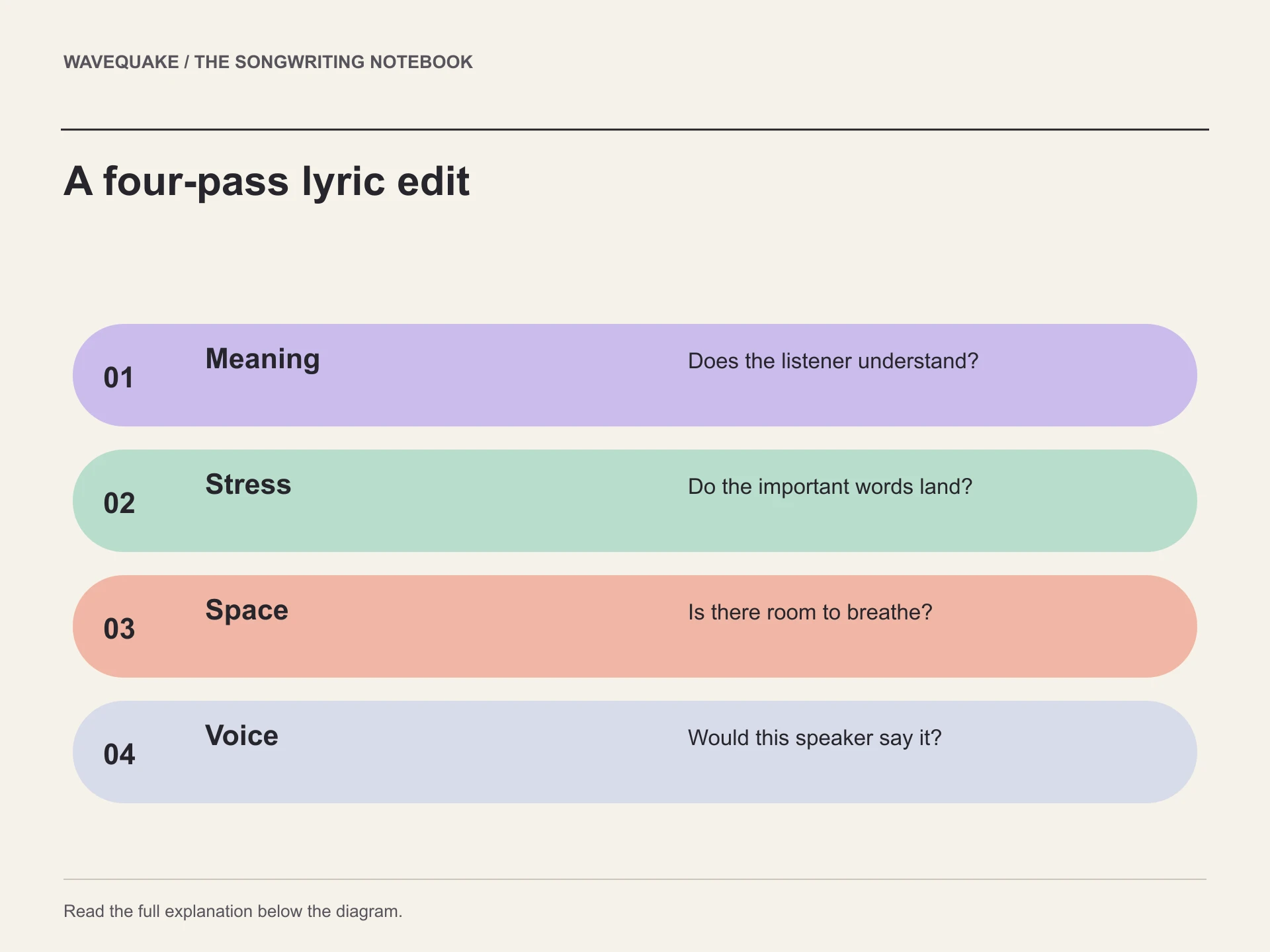 View full-size infographic
- MeaningDoes the listener understand?
- StressDo the important words land?
- SpaceIs there room to breathe?
- VoiceWould this speaker say it?
6. Finish a small lyric you can actually revise
A complete short draft teaches you more about the song than ten disconnected opening lines. Here is the verse beside a chorus and a possible second verse. Treat this as a working draft: the next step is to speak or sing it aloud.
[Verse 1]
The heater knocks against the wall
I warm my hands around your call
You ask if I have found my feet
I tell you names of nearby streets

[Chorus]
I can miss it and still stay
Let the morning find its way
Keep a little room for yesterday
I can miss it and still stay

[Verse 2]
The woman from the floor below
Says there’s a café I should know
She writes the name, then writes her own
I take the long way walking home
The repeated “stay” is intentional; it makes the phrase easy to recognize. “Let the morning find its way” is less specific than the verses, so it is a good candidate for another editing pass. You might replace it with a line that sounds more like this particular character.
Ask whether verse two changes the final chorus. Here the speaker has not solved loneliness, but she has accepted a small invitation. That modest shift is enough for the exercise. If every section states the same feeling, add an action or consequence before adding another verse.
For a genre-specific version of this process, try writing a country song. If you are starting with an existing poem, use the poem-to-song adaptation guide instead of forcing your text into this example’s shape.

7. Use Songwriter for a focused writing task
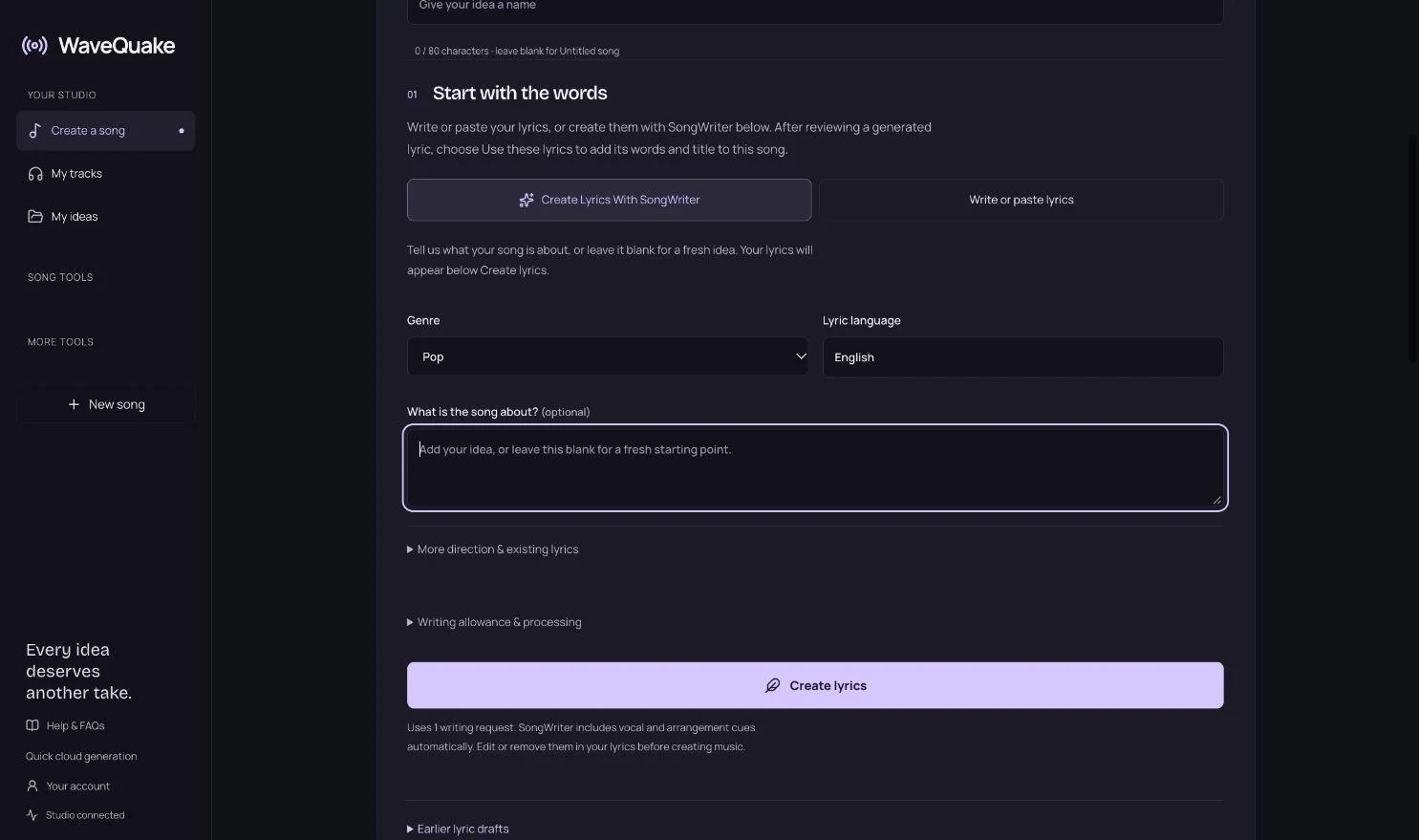
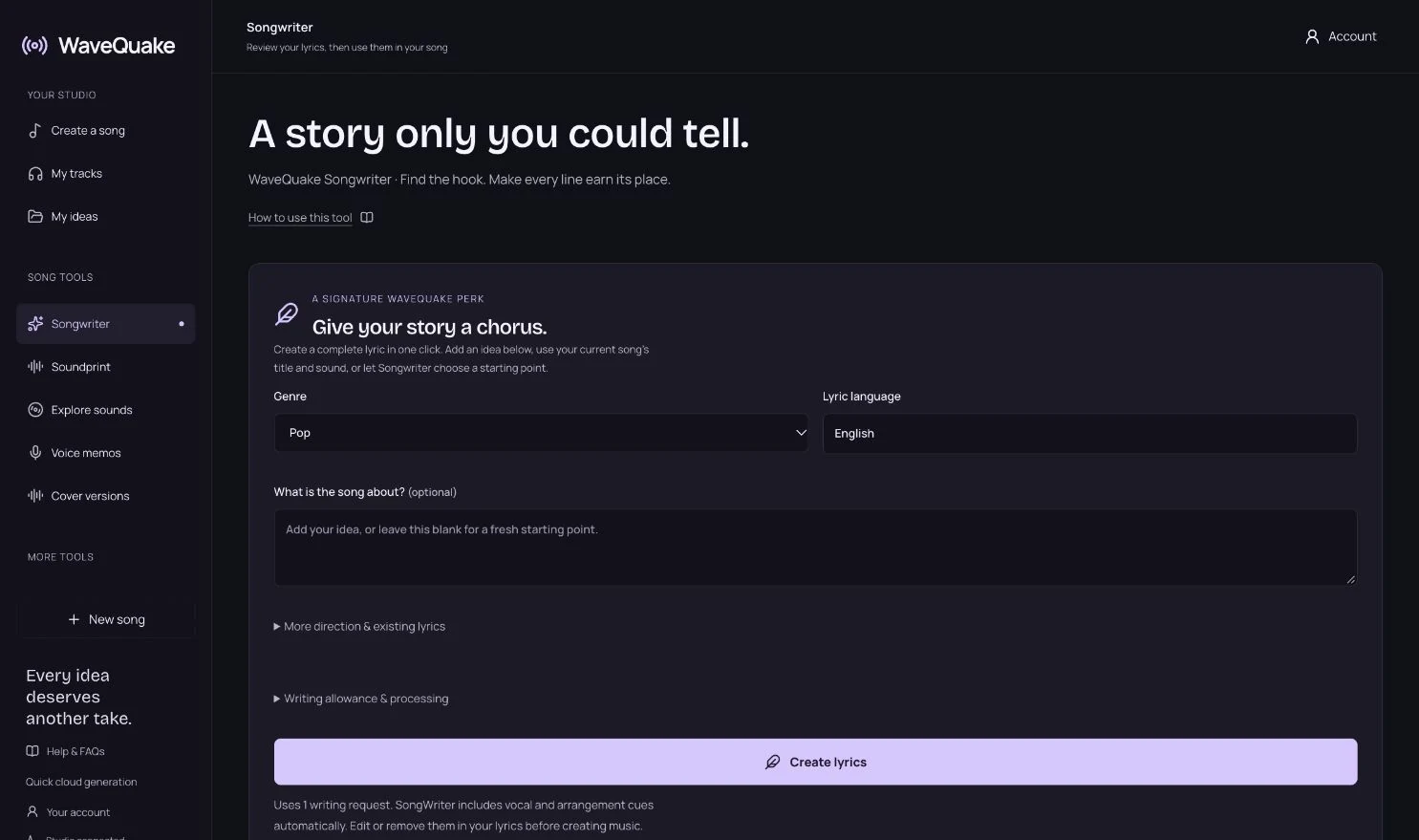
Open WaveQuake Songwriter and give it the situation, not only a broad emotion. Choose a genre and language, then describe what changes between the beginning and the end. A focused request gives you a clearer basis for deciding whether the draft works.
If a line matters, use the exact-line control and check the result. Keep a separate copy of your original. A hook to develop and a line to preserve are different instructions: one invites alternatives; the other protects wording. Review the returned lyric before applying it to a song.
A daughter has moved to a new city. She calls her dad and describes the streets instead of admitting she is lonely. In verse two, a neighbour invites her to a café. Keep the emotional change modest: she still misses home but chooses to stay. Use concrete actions and conversational language. Build the chorus around “I can miss it and still stay.”
Read the result in the writing room and edit it there. Remove an image that does not fit the setting, a line the speaker would not say, or a repetition that adds nothing. Do one clear revision at a time: “Make verse two show the invitation” is easier to evaluate than “Make everything better.”
Songwriter and Soundprint use the separate writing allowance. Standard music generation is included in the current one-time offer; it is a separate action after you have reviewed the words. You can also write and edit the lyric manually.
8. Give the lyric a musical setting, then listen
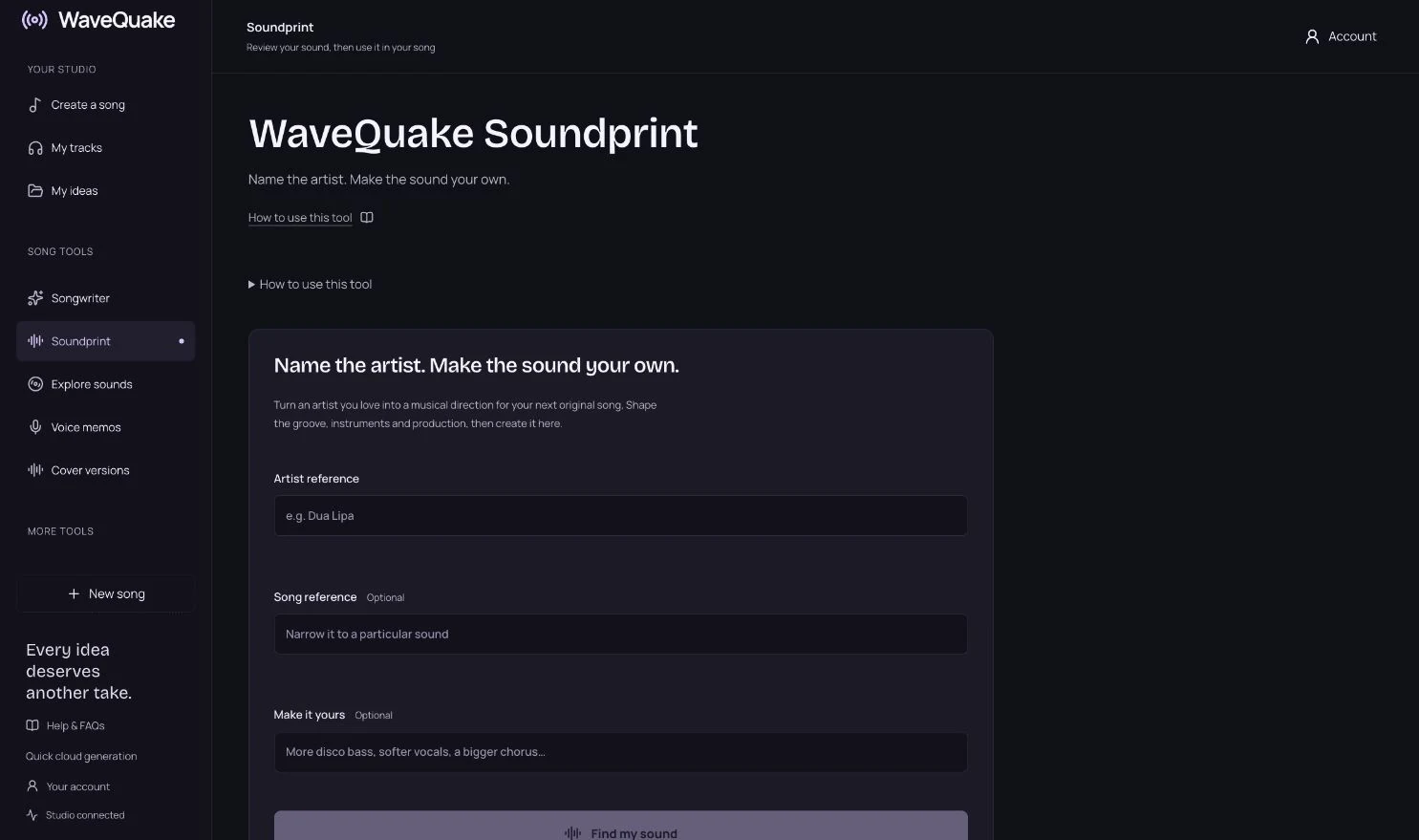
Choose a small set of compatible performance details. For our example, try a close conversational vocal, restrained acoustic guitar, warm piano and a chorus that opens slightly. A very busy arrangement may fight a lyric with many syllables, so leave space for the words first.
Use Soundprint when you can name a reference but struggle to describe its musical ingredients. Edit the resulting direction so it fits your own song. It supplies broad traits, not a copy of a singer’s voice or a guaranteed reproduction of a recording. Our music-prompt guide gives other starting points.
Create the music and compare both returned versions. Listen without reading the lyric once, then listen while following the words. Note omissions, unexpected repeats and phrases that are hard to understand. A strong first ten seconds does not tell you whether the second verse or ending works.
Write one observation before changing anything. If a line is crowded in both versions, simplify the words. If only one version rushes it, the issue may be that performance. Keep the better take as a reference while you revise; you do not have to solve every weakness in one pass.
9. Finish the performance and keep a useful record
Once the lyric and performance make sense together, compare mastering profiles. Listen at a comfortable, comparable level. A louder file can seem more exciting immediately, but finishing cannot turn a confusing story into a clear one or restore a missing word.
Download the version you want to keep, along with your lyric and sound brief. Name them so you can match them later: a working title, a date and a short note about the revision are more useful than a folder full of “final” files. Keep the original draft too; a discarded phrase may start another song.
For the next writing session, begin with the question your last draft exposed. Perhaps you can write scenes but your choruses stay vague, or you have strong hooks but no movement in verse two. Choose that one skill for a short exercise rather than treating the whole song as a failure.
The aim of a first lyric is a complete piece you can hear and improve. Finish something small, notice what it needs and return with a specific decision. That is a repeatable way to write, whether your next performance comes from you, a collaborator or the browser studio.
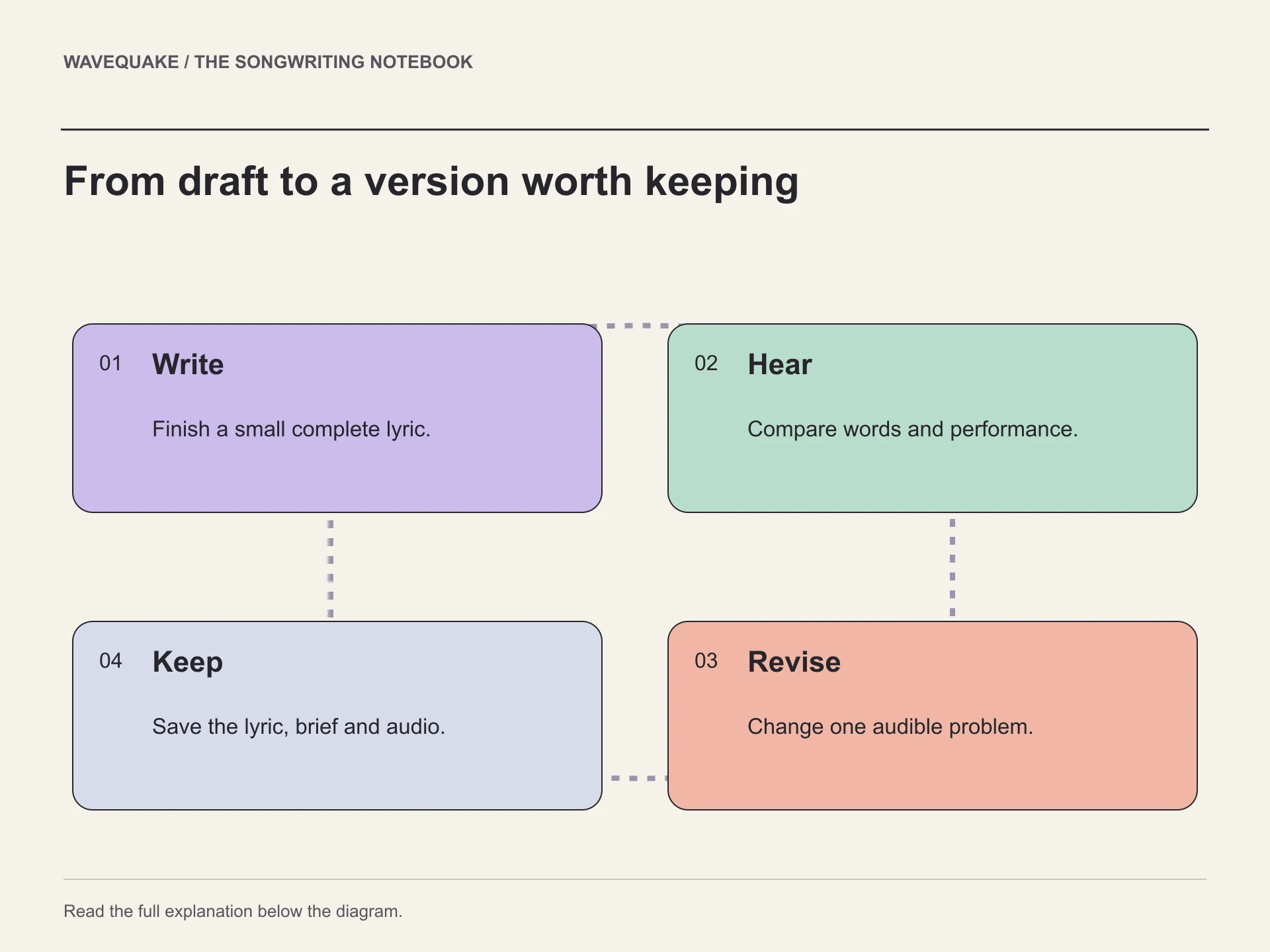 View full-size infographic
- WriteFinish a small complete lyric.
- HearCompare words and performance.
- ReviseChange one audible problem.
- KeepSave the lyric, brief and audio.
Common questions
How do I write lyrics for beginners?
Choose one situation and describe it in ordinary language. Pick a central sentence, sketch the section roles and write a short complete draft. Read it aloud before polishing the rhymes. The worked example above follows that process.
Do song lyrics have to rhyme?
No. Rhyme can create connection and expectation, but repetition, rhythm, imagery and melody can also hold a lyric together. Keep a clear natural line rather than changing the meaning only to land a rhyme.
Should lyrics or music come first?
Either can work. Starting with words lets you develop the story; starting with music gives you a rhythm and melodic shape to respond to. Expect to revise whichever part comes first when you bring them together.
Can I write lyrics without playing an instrument?
Yes. Speaking, tapping a pulse and humming can help you test phrasing. An instrument, collaborator or music generator can help develop a performance later. Your first task is making the words communicate.
How long should a first lyric be?
Use a short complete structure, such as two verses and a repeated chorus, as an exercise. There is no universal line count. The right length depends on how the story moves and how the words are performed.
Does Songwriter create audio immediately?
No. It creates an editable lyric draft using a writing request. Review the words, apply them in the composer and start music generation separately. Unlimited Standard Generations does not remove the separate writing allowance.
Sources & checking
Product details checked on 29 October 2026. Prices, features and terms can change; review the linked offer before purchasing. This is a product guide, not a comparative audio benchmark.